When you work with ion chromatography, understanding how ions separate based on their interactions with resin can transform your approach to analysis. You’ll learn how each component—from the pump to the detector—plays a crucial role in delivering accurate results. But choosing the right method isn’t always straightforward ion chromatography instrument, especially with complex samples. Knowing the fundamentals is just the start; mastering advanced techniques will elevate your capabilities in ways you might not expect.
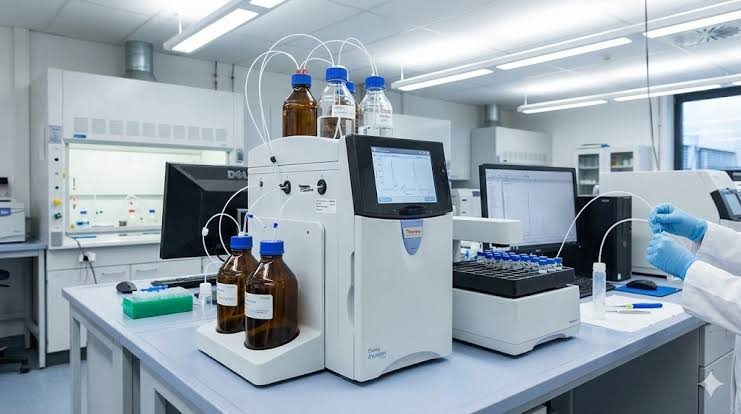
Ion Chromatography Separation and Detection Principles
Understanding ion chromatography separation and detection principles helps you grasp how this technique isolates and measures ions in a sample.
You start by passing your sample through a column packed with an ion-exchange resin, which separates ions based on their affinity to the resin. Positively or negatively charged ions stick to the resin differently Lab Alliance, causing them to elute at various times.
As ions exit the column, a detector measures their concentration, often using conductivity or UV absorption. This approach lets you identify and quantify ions quickly and accurately without complex preparation.
Essential Components and Setup Steps of Ion Chromatography Systems
To get reliable results from ion chromatography, you need to set up the system with its essential components properly. Start with the pump, which pushes your sample and eluent through the system at a consistent flow rate.
Next, the injector introduces your sample into the stream without interrupting flow. The heart of your setup is the ion exchange column, where separation happens based on ionic interactions.
After separation, the detector identifies and quantifies ions, often using conductivity measurement. Don’t forget the suppressor, which minimizes background conductivity for clearer signals.
Finally, connect everything with the right tubing and ensure your system is leak-free. By assembling these parts carefully, you maintain control and flexibility to get precise, reproducible results every time.
How to Choose the Best Ion Chromatography Method for Your Sample
When selecting an ion chromatography method for your sample, consider the specific ions you need to analyze and their concentrations. Different methods target anions or cations, so pick a technique aligned with your sample’s composition.
Think about the detection limits required—some methods excel at trace analysis, while others suit higher concentrations. Also, consider your sample matrix; complex mixtures might need specialized columns or suppressors to avoid interference.
Don’t overlook your analysis speed and throughput needs; faster methods may sacrifice some resolution but offer more freedom in time management. Finally, your budget and available equipment influence your choice—some advanced methods demand costly instruments or consumables.
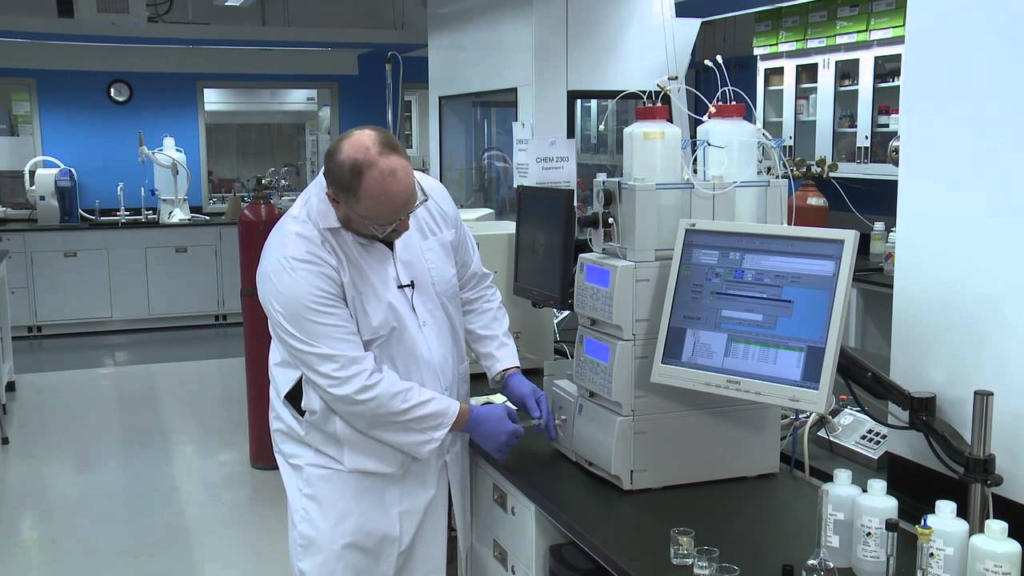
Practical Tips to Improve Accuracy and Reproducibility in Ion Chromatography
Choosing the right ion chromatography method sets the foundation, but achieving consistent, accurate results depends on how you handle your analysis. Start by maintaining your equipment meticulously—regularly clean columns, replace worn parts, and check for leaks.
Calibrate your system often, using fresh standards to ensure precision. Control sample preparation carefully; filter and dilute samples consistently to minimize variability.
Keep your mobile phase fresh and properly mixed, as its composition directly affects retention times. Monitor temperature and flow rates closely since fluctuations can skew results.
Document every step and run quality control samples regularly to track reproducibility. By mastering these practical habits, you’ll unlock the freedom to trust your data, streamline your workflow, and confidently interpret your ion chromatography results every time.
Advanced Ion Chromatography Techniques: Tackling Complex Samples
Although standard ion chromatography methods work well for many samples, complex matrices often demand advanced techniques to achieve accurate separation and detection.
You can tackle these challenges by using gradient elution, which adjusts the mobile phase composition dynamically, enhancing resolution for closely related ions.
Incorporating suppressor technology minimizes background noise, boosting sensitivity without extra sample prep.
Multidimensional ion chromatography lets you separate compounds in stages, perfect for samples with overlapping peaks.
You might also explore specialized columns tailored to your sample’s chemistry for sharper separation.
Don’t forget software tools that optimize method development and data analysis, giving you more control and freedom to customize your workflow.
Embracing these techniques empowers you to confidently analyze even the toughest samples with precision and ease.
Conclusion
By understanding ion chromatography’s core principles and components, you can confidently separate and analyze ions in your samples. Choosing the right method tailored to your target ions and matrix boosts accuracy and efficiency. Keep calibration and maintenance in check to ensure reproducibility. When facing complex samples, don’t hesitate to explore advanced techniques like gradient elution or multidimensional separations. With these tools and tips, you’re well-equipped to master ion chromatography and get reliable, precise results every time.
